How to teach Arabic alphabet to a 4 year old comes down to one rule most parents get backwards: shorter and slower beats longer and faster every time at this age. A four-year-old’s attention span, not the alphabet itself, is what sets the pace here, and the moment lessons ignore that, progress stalls before it starts.
This guide walks through the order, the session length, and the specific activities that work for a child this young, written for families raising a non-Arabic-speaking child in an English-speaking home.
How This Fits Into the Bigger Picture

The alphabet stage is the first step in a longer sequence that eventually leads to reading fluency and Qur’an literacy. Our complete guide on how to teach Arabic to a child who only speaks English lays out every stage after this one, including harakat and reading fluency, so you know what comes next once the alphabet is solid.
Why Age 4 Is a Good Starting Point
Four is old enough for a child to sit through a short, structured activity and young enough that letter shapes still feel like fun new pictures rather than schoolwork. Waiting until 6 or 7 doesn’t make the alphabet easier. It just delays the exposure that makes everything after it, reading and eventually Qur’an recitation, click faster.
That said, readiness matters more than age on a calendar. A 4-year-old who can sit for a five-minute activity and point at objects when asked is ready. One who can’t yet do either might need another few months before formal letter work, though passive exposure through songs can start regardless.
Some parents worry that starting the alphabet at 4 means falling behind if a sibling or cousin started later and seemed to catch up quickly. That comparison rarely holds up. Learning how to teach Arabic alphabet to a 4 year old the right way, with short, playful, low-pressure sessions, tends to produce a smoother path overall than starting later with more pressure to catch up quickly.
Session Length: Shorter Than You Think
Ten to fifteen minutes is the realistic ceiling for a 4-year-old, and many days five minutes done consistently outperforms a rare 20-minute push. This is the single most common mistake parents make when learning how to teach Arabic alphabet to a 4 year old: treating a toddler’s attention span like an older child’s.
Two or three letters per session is plenty. Trying to cover the full alphabet in a handful of long sessions creates the appearance of speed while actually producing weak retention, since a 4-year-old’s working memory simply can’t hold that much new information at once.
Start With the Most Visually Distinct Letters
Not every letter is equally easy for a young child to tell apart. Begin with letters that look clearly different from one another, such as ا (alif), ب (baa), and م (meem), before moving to letters that resemble each other closely, like ب ت ث, which differ only in the number and placement of dots.
Introducing look-alike letters too early is a common source of confusion. Once a child has a handful of clearly distinct letters locked in, similar-looking groups become much easier to tell apart by comparison, since the child now has reference points.
We cover the full recommended order, including where harder letters fit later on, in our guide on what order to teach Arabic letters.
Common Mistakes Parents Make at This Stage
A few patterns show up again and again when parents try to figure out how to teach Arabic alphabet to a 4 year old on their own, usually with good intentions but the wrong pacing.
The first is introducing too many letters at once because the child seems to be enjoying the session. Enjoyment isn’t the same as retention, and a child who happily sits through ten new letters in one sitting will typically remember two or three of them by the next day.
The second is skipping review sessions in favor of always pushing forward. Without regular review, earlier letters fade before they’re solid, which means the child is technically covering more letters but retaining fewer of them overall.
The third is correcting pronunciation too sharply. A 4-year-old who gets corrected repeatedly in a short session often disengages entirely. Gentle repetition of the correct sound works better than pointing out the mistake directly.
Tools and Materials That Actually Help
You don’t need an elaborate setup to teach the alphabet at this age. A few simple materials cover almost everything:
- A set of large, simple flashcards with one letter per card, no extra decoration that could distract from the shape
- A shallow tray for sand or rice tracing, which can be as simple as a baking tray
- Play-dough or modeling clay for shaping letters
- A short playlist of Arabic alphabet songs for passive, repeated exposure during car rides or downtime
- A simple sticker chart to mark completed sessions, since visible progress motivates young children more than abstract praise
Expensive apps and elaborate curricula aren’t necessary at this stage. What matters far more than the materials themselves is the consistency of short, low-pressure sessions.
Multisensory Activities Beat Worksheets at This Age
A 4-year-old learns a letter shape far more reliably through touch and movement than through a printed page. A few approaches work consistently well:
- Tracing the letter in a shallow tray of sand, rice, or shaving cream before ever picking up a pencil
- Rolling play-dough into the letter’s shape
- Giving each letter a short, memorable story or character, such as describing alif as standing tall like a pole
- Matching games where the child pairs a letter card with an object that starts with its sound
- Simple Arabic alphabet songs repeated consistently, since melody helps young children retain sequences
Worksheets and pencil tracing have a place, but they work best after a letter shape is already familiar through play, not as the first introduction to it.
Don’t Skip Pronunciation, Even at This Age
It’s tempting to focus purely on shape recognition with a 4-year-old and leave pronunciation for later. That’s a mistake for a specific reason: young children pick up sounds more naturally than older ones, and Arabic contains several sounds that simply don’t exist in English.
Model the correct sound every time you introduce a letter, even if your child’s own pronunciation isn’t perfect yet. Gentle, repeated modeling works better than correction, and a 4-year-old exposed early to sounds like the throat letters has an easier time later than one who hears them for the first time at age 8. Our guide on the hardest Arabic letters for English speakers covers which sounds need the most deliberate attention.
Consistency Beats Intensity
A daily 10-minute routine at the same time, right after breakfast or before bed, builds a habit a 4-year-old comes to expect, which lowers resistance over time. An irregular schedule, by contrast, means every session starts from a small reset, since the child hasn’t had enough repetition to build real familiarity.
If a session doesn’t happen one day, resist the urge to double up the next day to compensate. A rushed makeup session at this age usually produces frustration rather than extra progress.
What Progress Actually Looks Like at This Age

Don’t expect a 4-year-old to read words within weeks. The realistic milestone is letter recognition: being able to name a letter shown out of order, and eventually connect it to its sound. Reading full words typically comes later, closer to age 5 or 6, once a solid bank of letters and beginning sound awareness is in place.
Progress at this age is also not linear. A child might recognize five letters confidently one week and seem to forget two of them the next. That’s normal consolidation, not regression, and pushing harder in response usually backfires.
How to Teach Arabic Alphabet to a 4 Year Old: A Simple Weekly Structure
A workable starting structure for most 4-year-olds looks like short, frequent touches rather than long formal lessons:
- 3 to 4 short sessions per week, 10 to 15 minutes each
- 2 to 3 new letters introduced per session, with heavy review of previous ones
- One dedicated review-only session weekly, no new letters
- Passive exposure the rest of the week through songs or labeled objects around the house
A Sample First Two Weeks
Seeing a concrete plan often makes how to teach Arabic alphabet to a 4 year old feel less abstract. A realistic first two weeks might look like this: days one through three introduce alif, baa, and taa with tracing and a matching game; day four is pure review with no new letters; days five and six add thaa and jeem, chosen for their visual distinctness from the first group; day seven is review plus a simple song. The second week repeats this rhythm with new letters while folding in short daily review of everything covered so far.
Notice that review appears in roughly a third of the sessions. That ratio isn’t arbitrary. Without it, a 4-year-old’s recognition of earlier letters drops off quickly, and the parent ends up reteaching material that should already be settled.
When to Bring In a Teacher
Many families successfully teach the alphabet stage at home, and there’s no need to rush into formal lessons before age 4 or 5. Plenty of parents figure out how to teach Arabic alphabet to a 4 year old entirely on their own with good results. Where a qualified teacher tends to add the most value at this age is pronunciation modeling and pacing, since a trained teacher notices early mispronunciation patterns a parent might miss and adjusts session length to the specific child rather than a general guideline.
Our Arabic for Kids program is built around exactly this age range, with sessions kept short and teacher-led pacing designed for children who are just starting out, not adapted down from lessons meant for older learners.
How This Differs From Teaching an Older Sibling
Parents who already taught an older child the alphabet sometimes assume the same approach will simply work faster the second time around with a younger one. It usually doesn’t, and treating a 4-year-old like a compressed version of a 7-year-old is a common source of frustration for both parent and child.
An older child can typically handle a longer session, sit through more explicit grammar-style explanation, and tolerate more direct correction. A 4-year-old needs the material delivered almost entirely through play, with correction folded into repetition rather than stated outright. The end goal, letter recognition and correct sound association, is the same, but the path to get there looks noticeably different.
Siblings also learn at different paces even with identical teaching methods, so resist comparing a younger child’s timeline to an older sibling’s. What matters is steady movement forward for this particular child, not matching someone else’s pace.
How Long Until the Full Alphabet Is Covered?
With three to four short sessions a week and two to three new letters per session, most 4-year-olds work through the 28 letters over roughly three to five months, including regular review weeks that add letters at a slower pace than a pure introduction schedule would suggest. That timeline will vary. A child who’s naturally drawn to letters and symbols might move faster, while a child who needs more repetition per letter will take longer, and neither pace is a problem worth worrying about.
What matters more than hitting a specific timeline is that recognition stays solid as new letters get added. A family that reaches all 28 letters in two months but can only reliably recognize half of them has made less real progress than one that takes five months and retains nearly all of them. Speed without retention isn’t actually speed, it’s just the appearance of it.
Once the full alphabet is reasonably solid, the next stage, harakat and early reading, follows a different pace entirely, which is covered in our broader guide on how to teach Arabic to a child who only speaks English.
A Quick Checklist Before You Start
- Sessions capped at 10 to 15 minutes, ideally at a consistent time of day
- Two to three new letters per session, chosen for visual distinctness first
- At least one review-only session each week with no new material
- Correct pronunciation modeled every time, even before the child can reproduce it accurately
- Multisensory activities, tracing, play-dough, songs, used before formal pencil-and-paper worksheets
- Progress measured by recognition out of sequence, not by how many letters were “covered”
Building in Arabic Beyond the Formal Session
Formal sessions aren’t the only place letter learning happens at this age. Labeling a handful of household objects with their Arabic names, playing an alphabet song during the drive to preschool, or pointing out a letter shape on a cereal box all add small, low-pressure repetitions that add up over weeks. None of this needs to be structured or scheduled. It works precisely because it doesn’t feel like a lesson to the child.
Parents sometimes worry that casual exposure without correction will teach a letter shape incorrectly. In practice, a 4-year-old absorbing a letter’s general shape from a song or a labeled object, without formal drilling, complements rather than undermines the structured sessions, since the two reinforce different kinds of memory, one associative and casual, the other deliberate and corrected.
What to Do When Two Letters Keep Getting Confused
Even with a visually distinct starting sequence, some letter pairs will still get mixed up, and that’s a normal part of the process rather than a sign something is wrong. When this happens, the most effective fix is usually separating the two letters temporarily, focusing only on one for several sessions until it’s solid, then reintroducing the second on its own before finally practicing them side by side again.
Drilling both confused letters together repeatedly, hoping repetition alone will sort out the confusion, often backfires and reinforces the mix-up rather than resolving it. Giving each letter its own dedicated story, sound, or physical gesture also helps a 4-year-old build a distinct mental hook for each one rather than lumping similar shapes together.
Adjusting the Pace for a Child Who Isn’t a Typical 4-Year-Old
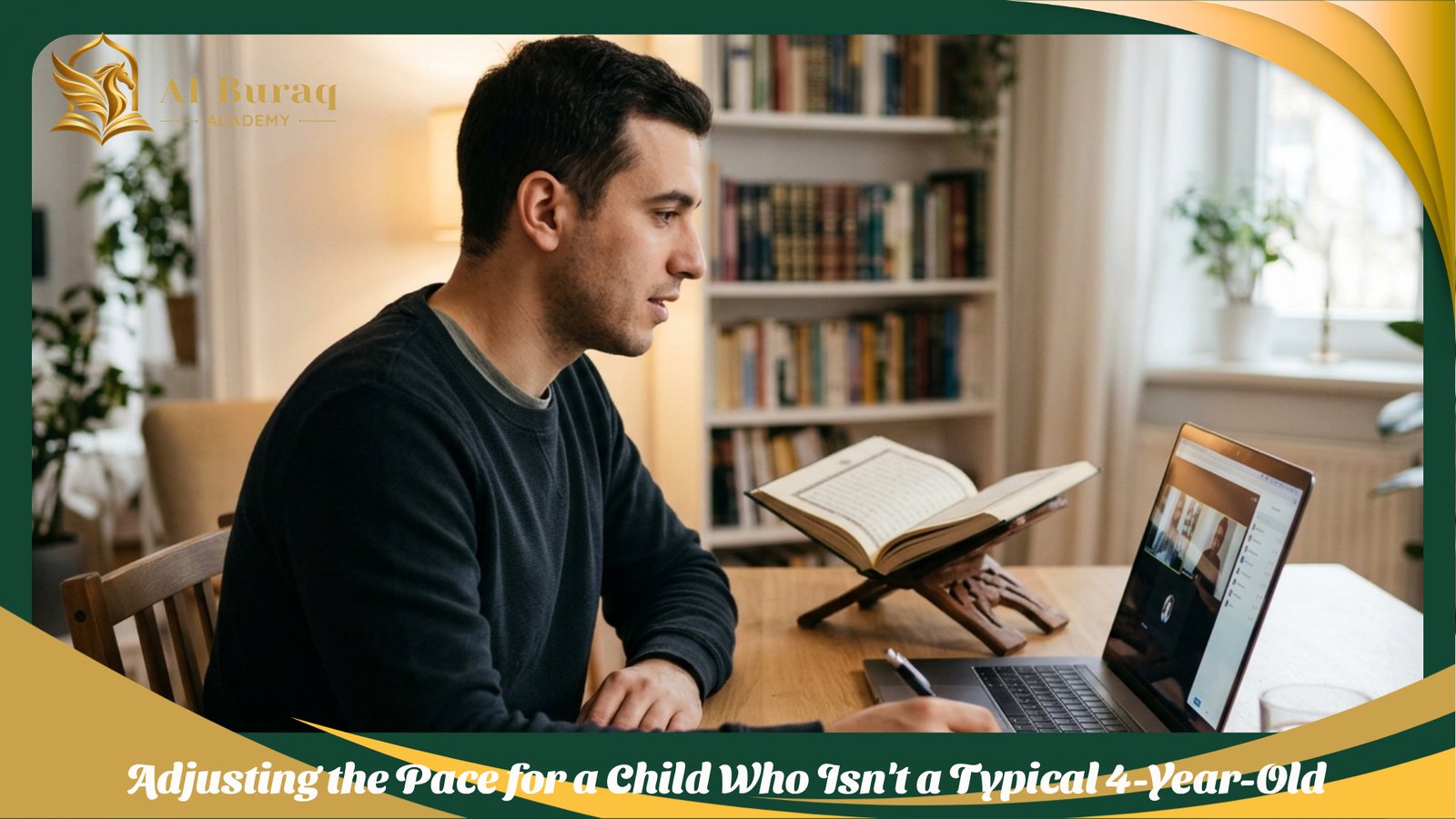
Not every child fits neatly into the pacing described in this guide. A child with a speech delay, a shorter-than-average attention span, or simply less prior exposure to structured activities may need smaller steps, shorter sessions, or a slower letter-introduction pace than what’s outlined here. None of this reflects a problem with the child’s ability to eventually learn the alphabet. It reflects a need to match the pace to the individual rather than a generic age-based guideline.
On the other end, a child who’s unusually drawn to letters and symbols, perhaps already curious about the English alphabet or numbers, may move through this sequence faster than described here. Following the child’s actual engagement level, rather than rigidly adhering to a fixed weekly plan either way, produces better results than forcing either a faster or slower pace than what the child is actually ready for.
Frequently Asked Questions
A few questions come up often from parents starting the alphabet stage with a young child.
Is 4 too young to start, or should I wait until kindergarten?
Four is a reasonable starting point for most children, provided sessions stay short and playful. There’s no strong developmental reason to wait until kindergarten specifically, and earlier passive exposure to sounds tends to help pronunciation later.
What if my 4-year-old loses interest after a few minutes?
End the session there. Pushing past a young child’s attention span rarely produces extra learning and often creates resistance to the next session. A shorter, positive session beats a longer one that ends in frustration.
Should I teach the alphabet in order, alif to yaa?
No. Teaching by visual difficulty rather than alphabetical order reduces early confusion. Strictly alphabetical order groups several look-alike letters close together, which is harder for a young child to untangle.
Do I need to know Arabic myself to do this at home?
No, though modeling correct pronunciation is harder without it. Many parents pair home practice with a teacher or an app that provides correct audio, so pronunciation isn’t left to guesswork. According to the Zero to Three child development organization, consistent exposure matters more at this age than parental fluency.
Teaching Arabic alphabet to a 4 year old works best as short, frequent, multisensory sessions built around the letters your child can tell apart most easily, not a formal curriculum borrowed from an older classroom. Keep sessions under 15 minutes, model pronunciation from the start, and expect recognition rather than reading as the first real milestone. Progress will look uneven from week to week, and that’s normal rather than a sign that something needs to change. Families who want that pacing handled by a teacher trained specifically for this age group can start with a trial lesson through Al Buraq Academy.